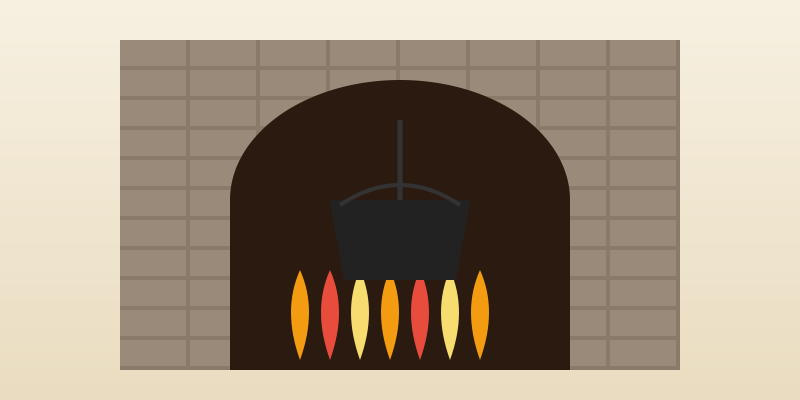
Few kitchen tools have lasted as long as cast iron. Pots, kettles and pans made by pouring molten iron into molds were cooking staples for centuries, hanging over hearth fires long before stoves existed. Many families still cook with skillets passed down through generations. This article looks at how cast iron became so important, why it remains popular, and how to look after it so it lasts another hundred years.
From the hearth to the stovetop
Casting iron is an ancient technique, but cast-iron cooking pots became widespread in Europe and later in North America as iron production grew in the early modern period. Before kitchen ranges, most cooking happened over an open hearth. Heavy three-legged pots stood directly in the embers, kettles hung from cranes and hooks, and lidded pots with flanged lids, the ancestors of today's Dutch ovens, could be buried in coals so heat came from above and below. Bread, stews, beans and roasts were all cooked this way.
When iron and later gas stoves spread through homes in the nineteenth and early twentieth centuries, cookware changed shape. Flat-bottomed skillets and griddles suited the new cooktops, and cast-iron skillets became a fixture of home kitchens, especially in rural areas and in the American South, where cornbread baked in a hot skillet remains a tradition.
Why cast iron endured
- Durability. Cast iron is very hard to destroy. Rust can be removed and the surface re-seasoned.
- Heat retention. Its mass holds heat well, which is ideal for searing, frying and baking.
- Versatility. The same pan can go on the stove, in the oven or over a campfire.
- A natural non-stick surface. Well-seasoned cast iron releases food easily, built up over years of use.
Its main drawbacks are weight, slower heating than thinner metals and the need for some care to prevent rust.
What "seasoning" really is
Seasoning is a thin layer of oil that has been heated past its smoke point until it polymerizes, bonding to the iron as a hard, slick coating. It protects the metal from rust and helps food release. Every time you cook with fat, you add a little more. That is why old pans often perform beautifully: they carry decades of seasoning.
How to season a pan
- Wash the pan and dry it thoroughly, then warm it briefly on the stove to drive off moisture.
- Rub a very thin layer of a neutral, high-smoke-point oil over every surface, inside and out.
- Wipe off as much as you can, so the pan looks almost dry. Too much oil leaves a sticky finish.
- Bake upside down in an oven at around 450–500°F (230–260°C) for an hour, with a tray below to catch drips, then let it cool in the oven.
- Repeat two or three times for a new or stripped pan.
Everyday care
- Clean while warm. Use hot water and a brush or scraper. A small amount of mild soap is fine on a well-seasoned pan; avoid long soaks.
- Dry immediately. Wipe dry and warm on the stove for a minute.
- Oil lightly. Rub in a few drops of oil while warm, and wipe off the excess.
- Store dry. Keep it somewhere with airflow; a paper towel inside helps absorb moisture.
- Go easy on acids at first. Long simmering of tomato sauces or wine can wear thin seasoning. Well-seasoned pans handle short cooking times better.
Restoring a rusty or neglected pan
Old cast iron found at yard sales or in family attics can often be brought back. Scrub surface rust with steel wool, wash, dry and re-season as above. Heavily crusted pans may need more serious stripping, and badly cracked or warped pieces are best kept as decoration. Wear gloves and work in a ventilated space if you use cleaning products.
Cast iron and traditional recipes
Many heritage recipes were written with cast iron in mind: skillet cornbread, pan-fried chicken, biscuits baked in a pan, slow-cooked beans in a Dutch oven. Cooking them in the original type of vessel is a satisfying way to connect with the past. Our article on heritage quick breads includes skillet cornbread, and preserving family recipes explains how to record the ones in your own family.
Gourmet Fade is an independent food-history and cooking site. Information is general and educational; follow current food-safety guidance for your kitchen.
Updated October 17, 2026.